
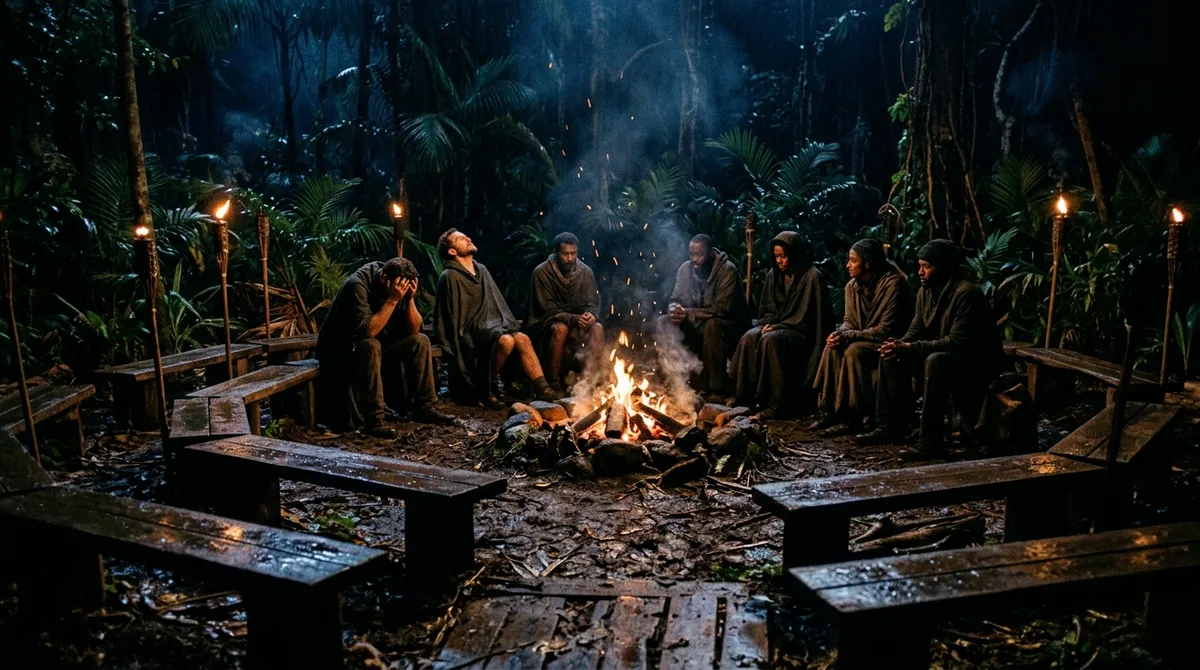
Survivor 50 episode 10 pushes the season into a sharper, stranger lane, where old-school social survival collides with the spectacle-driven energy of modern competition television. The CBS reality staple has always rewarded patience, discipline, and persuasive timing. This installment keeps those fundamentals intact, but it also feels aware of a culture shaped by giant stunts, viral prizes, and the MrBeast-style promise that any challenge can become a life-changing event.
The Game Tightens
By episode ten, Survivor usually stops pretending that comfort matters. The beach is harder. Food feels more valuable. Trust becomes brittle. Every small conversation carries risk, because everyone left can see the endgame from a distance.
This week leans into that pressure. The players are no longer just surviving the island. They are surviving each other. After the previous vote, the tribe enters camp with a familiar mix of relief and suspicion. Some players feel protected by numbers. Others understand that being included in a vote does not always mean they control it.
The result is an hour built around uncertainty. Alliances remain visible, but their foundations start to crack. The people in power want the next vote to look simple. The people near the bottom need it to become messy. That tension gives the episode its momentum.
A Bigger, Flashier Survivor Era
The most interesting layer of the episode is how openly it reflects the current state of reality TV. Survivor launched as a social experiment about isolation, endurance, and moral compromise. Now, it airs in an entertainment world dominated by high-budget stunts, creator-driven contests, and instant online reaction.
That is where the MrBeast comparison becomes useful. The episode does not need to abandon Survivor's identity to feel influenced by that broader culture. The reward structure, the heightened stakes, and the editing rhythm all create a sense that the show is competing with louder formats while still defending its own formula.
Survivor works best when prizes reveal character. A meal is never just a meal. A short escape from camp is never just a break. The value comes from who gets chosen, who gets excluded, and who resents the decision afterward. Episode 10 understands that dynamic and uses it well.
The Reward Challenge Creates New Problems
The reward challenge arrives at exactly the right point in the season. Everyone is hungry. Everyone is tired. Everyone is pretending they can separate personal feelings from strategy. They cannot.
The challenge itself delivers the usual mix of physical effort and emotional consequence. Winning matters, but the real game begins after the result. The reward forces a social choice, and that choice affects the camp more than the prize itself.
The selected players get time away from the beach and a chance to exchange information in a safer setting. That privacy matters. In the late game, a reward can become an unofficial strategy summit. The people who miss out know this, which makes the return to camp even more awkward.
Survivor has used this device for decades, but it still works because scarcity sharpens emotion. One player sees the reward as proof of trust. Another sees exclusion as a warning sign. A third uses the downtime to plant a seed that may not bloom until Tribal Council.
Camp Life Turns Into Quiet Warfare
Back at camp, the episode shifts into a slower and more revealing mode. Nobody wants to seem paranoid, yet nobody can afford to relax. Conversations happen in pairs. Then those pairs dissolve. Names move from one group to another with increasing speed.
The majority alliance tries to maintain control by offering a clean target. That is standard Survivor management. If everyone believes the vote is obvious, fewer people search for alternatives. But obvious plans often fail because they make outsiders desperate.
The episode does a strong job showing how late-game power can become a trap. A player at the center of the numbers may look safe, but that visibility also creates danger. People begin asking the most important Survivor question: if we do not remove this person now, when will we get another chance?
Meanwhile, the players on the edges search for leverage. They may not have enough numbers alone, but they can become valuable if the majority fractures. In modern Survivor, being a swing vote can be more powerful than being part of a large alliance, as long as the swing vote understands the timing.
The Immunity Challenge Raises the Stakes
The immunity challenge gives the episode its clearest dividing line. Before it, everything is possible. After it, the vote narrows, and every backup plan must adjust.
As usual, Jeff Probst frames immunity as more than safety. At this stage, the necklace can reshape the entire board. A vulnerable target becomes untouchable. A comfortable alliance has to improvise. A player who needed one more day suddenly gets a new life.
The challenge emphasizes focus under pressure, which fits the episode's theme. Survivor is rarely about who wants something most. Everyone wants it. The question is who can manage pain, nerves, and distraction long enough to stay alive.
Once immunity is claimed, the strategic pace quickens. The original plan no longer feels as stable as it did earlier. Players start testing softer options. Names that were mentioned casually become real possibilities. The beach turns into a negotiation room with no walls.
Why the Vote Becomes So Complicated
The central strategic conflict comes down to risk. One side prefers a safer vote that preserves the current structure. The other side sees an opportunity to strike at someone with stronger long-term prospects.
This is classic Survivor math. A safe vote can protect players for one night while damaging their chances to win later. A bold vote can improve someone's path to the end, but it can also expose them too early. Episode 10 lives inside that dilemma.
The best players understand that every vote tells a story to the jury. Removing a passive target may keep the peace, but it does not always build a winning résumé. Taking out a major threat can impress future jurors, though it may also make the move-maker the next obvious target.
The episode also highlights the emotional side of strategy. People do not vote only with logic. They vote with pride, fear, hunger, loyalty, and annoyance. A poorly timed comment can matter. A reward decision can matter. A conversation that feels too rehearsed can send someone scrambling.
Tribal Council Exposes the Real Power Structure
Tribal Council brings the episode's hidden tensions into public view. The answers sound careful, but the body language says more. Some players try to project calm. Others look like they are counting votes in real time.
Jeff Probst presses the tribe on trust, timing, and the difficulty of knowing where a person truly stands. Those themes are not new, but they feel especially relevant here. By episode ten, nobody can hide behind early-game uncertainty. Every remaining player has a record.
The vote reveals that the tribe is less unified than it appeared. Whether the move is framed as a blindside, a correction, or a necessary survival play, it changes the direction of the season. The eliminated player leaves because their read of the group was incomplete. That is often the cruelest way to go in Survivor.
More importantly, the vote leaves damage behind. People who were left out must decide whether to forgive, retaliate, or pretend nothing happened. People who controlled the vote must manage the attention that comes with success.
What Episode 10 Means for Survivor 50
This episode succeeds because it balances spectacle with social consequence. The show can nod toward the modern reality TV arms race without losing the elements that made Survivor enduring. Big rewards and dramatic challenges help, but the heart of the game remains human behavior under stress.
Survivor 50 episode 10 also clarifies the season's endgame. The path to the final Tribal Council is no longer theoretical. Players must now decide what kind of game they want to present to the jury. Did they lead? Did they adapt? Did they survive only because larger targets shielded them?
The strongest contenders are those who can combine flexibility with intent. They need allies, but not chains. They need visible moves, but not reckless ones. They need enough trust to reach the end and enough ownership to win once they get there.
Conclusion
Episode 10 of Survivor 50 is a reminder that the franchise remains powerful because it turns simple choices into complicated consequences. A reward pick becomes a strategic signal. An immunity win rewrites the vote. A quiet conversation can decide someone's fate.
The CBS series may now exist in the shadow of louder, flashier competition formats, including the MrBeast era of oversized stakes and viral spectacle. Yet Survivor still has something those formats often cannot copy: a social game where every decision leaves a mark. This episode proves that the oldest tricks in the Survivor playbook still cut deep when the timing is right.